
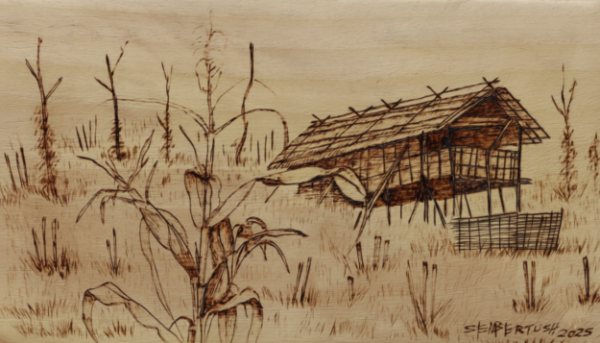
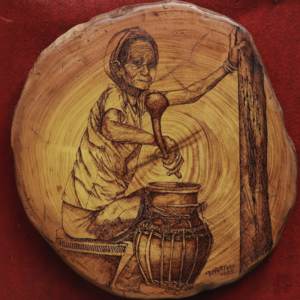
Wood Burning Wall Art – Traditional Jhum Cultivation Shelter (A·ba Jamadal), Garo Hills, India
Wood Burning Wall Art
- Authentic Indigenous Farm Scene: This handcrafted wood burning artwork depicts Jhum cultivation, the traditional shifting farming system practiced by the Garo people of Northeast India for centuries.
- A·ba Jamadal (Field Shelter): The artwork features a small hut known locally as A·ba Jamadal (or Jamadal), built at the center of cultivated land, symbolizing farmers enjoying the sight of crops growing from their hard work and dedication.
- Multipurpose Agricultural Shelter: Traditionally, the Jamadal is used for resting during farm work, temporary storage of harvested crops, occasional cooking, and protection from weather before produce is transported to village storage areas.
- Celebration of Rural Life & Labor: The scene reflects the deep connection between farmers and their land—capturing moments of satisfaction, patience, and pride as crops yield through perseverance and sweat.
- Handcrafted on Natural Wood: Created using traditional wood burning techniques on natural wood. The organic grain and hand-burned lines ensure each piece is unique, with slight natural variations.
- Cultural & Educational Artwork: Ideal for home décor, offices, museums, galleries, cultural institutions, and collectors interested in indigenous farming systems and sustainable traditions.
- Artisan Crafted – Mandi Art: Created by Mandi Art, a Garo Hills–based artisan collective known for preserving A·chik heritage through wood burning, wood carving, painting, and handmade crafts using locally sourced materials.
- Supports Indigenous Communities: Your purchase directly supports local artisans and helps preserve traditional knowledge, sustainable farming practices, and cultural identity.
- Customization Available: Custom themes, sizes, or cultural subjects available on request.
📱 WhatsApp: +91 70058 76381
📧 Email: sembertush@gmail.com
Beyond crafts and apparel, readers can also explore a rich collection of Garo literature, including short stories, poems, and articles. Some of these works have been published in local magazines and newspapers, and are also available to read online on the Jamadal blog, where readers can explore more of Garo literary contributions.
If you are interested in discovering more indigenous publications, you may also browse our Garo books collection. To learn more about the cultural background of the Garo community, you can visit the official page of the Garo Hills Autonomous District Council.





Reviews
There are no reviews yet.